
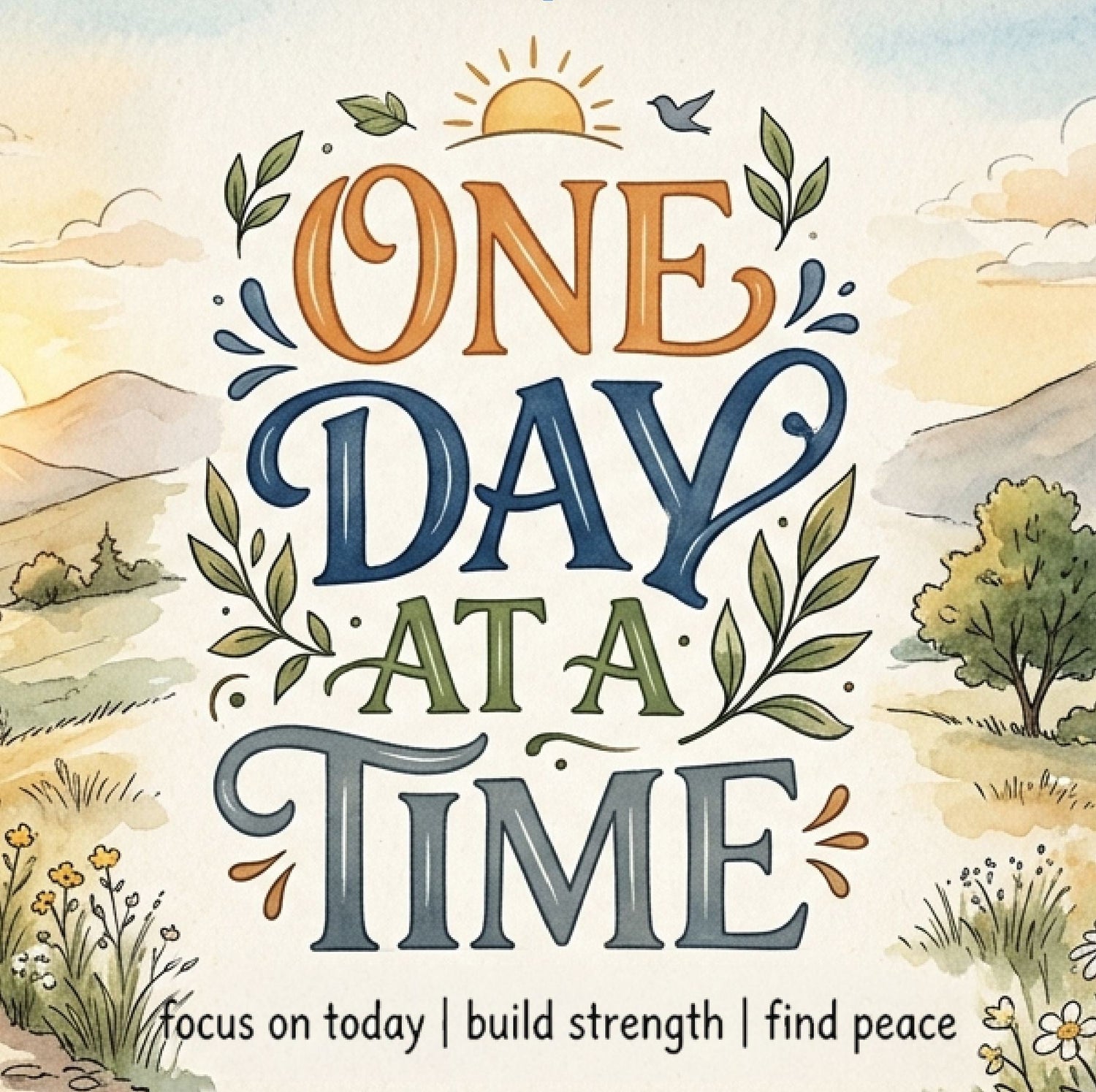

ONE DAY AT A TIME:
Breaking Free From the Narcissist You're Addicted To
By Ross Rosenberg, M. Ed.
When a person with Self-Love Deficit Disorder (SLDD), also known as codependency, tries to break free from a pathological narcissist, they are quickly consumed — overwhelmed and overpowered by an addictive pull back toward the very situation they fought so hard to escape. To the addict, SLDD addiction, like alcoholism or any deeply entrenched addiction, feels impossible to overcome.
The comparison may seem strange, even ridiculous: a person is not a bottle of vodka. Yet the pull is the same. The craving is the same. So is the familiar bargaining — the belief that with just a little more time, the narcissistic partner will finally change and become who they once were. And the outcome is the same: a return to where it all began, dismayed, ashamed, deflated, and consumed by enough negative thinking to justify giving up entirely. That is addiction. It may be the most difficult of all to overcome.
In Alcoholics Anonymous, "one day at a time" is a time-honored phrase that has saved more lives than can ever be counted. The idea is beautifully simple. An alcoholic told they can never drink again — not ever, for the rest of their life — may feel as if they must cross a towering mountain to reach safe territory. Overwhelming. Crushing.
What if you broke that trip over the mountain into a succession of shorter, less terrifying steps — and focused only on getting through the first one before moving on to the next? This is exactly how AA reduces the toughest fight of a person's life into manageable steps. You don't have to stay sober forever. You just have to stay sober today. And anyone can get through one single day.
Whenever possible, avoid making "today I quit forever" promises. They are impossible to keep and only set a person up for constant failure and the stinging shame that follows. Instead, promise yourself only what is actually possible: staying narcissist-free one day at a time. For these 24 hours, you can survive this fight. Tomorrow is another day's problem. Right now, you only have to survive this day.
What makes this fight so brutal is a force I call pathological loneliness — SLDD addiction's primary withdrawal symptom. This is not ordinary loneliness, the kind that passes with a phone call or a busy weekend. It is excruciating, bone-deep pain experienced physically, emotionally, existentially, and spiritually. In its grip, you feel isolated, unloved, unsafe, and fundamentally unworthy. It typically lasts two to six months — which is exactly why "forever" promises collapse, and why surviving one day at a time is the only promise worth making.
Pathological loneliness cuts so deep because it is not really about missing the narcissist. It is the reopening of the oldest wound: the core shame — the feeling of being fundamentally damaged or unlovable — created by childhood attachment trauma. The relationship was medicating that wound all along. So when the person in withdrawal begins bargaining, believing that with a little more time the narcissist will change, they are not weak or foolish. They are addicts reaching for their drug of choice to stop the pain of withdrawal — a pain that, taken one day at a time, can be survived.
To avoid the searing pain of SLDD withdrawal — to escape the loneliness that swallows you whole — you must know, and remind yourself every day, that you are battling one of the worst addictions there is. You must find the courage, strength, and resolve to love and care for yourself as you would for a child.
This is biological and psychological warfare. Your mind is capable of lying and betraying you, trying to convince you to leave your recovery and return to a love that is inherently harmful. This is not just a psychotherapist's opinion, formed in theory and untested in real circumstances. Quite the contrary: I've lived this. I have been in those relationships. I've felt the overwhelming, impossible-to-resist pain of pathological loneliness, which would scream at me, "Just forget what you think is good for you... go for what feels right, what your heart needs." I've sat at two in the morning with my thumb hovering over the call button, every cell in my body screaming that I needed to hear their voice. That's not weakness. That's not stupidity. That's your brain betraying you.
So when a single day feels like too much — and there will be days when it does — shrink the mountain down even further. Just the next hour. And if the hour is too much, the next ten minutes. Ride the craving like a wave: it rises, it crests, and — believe me — it passes. You want to live free from narcissistic abuse and from your self-sabotaging belief system at last. You want to stop drowning.
So grab onto this life-preserving "one day at a time" wisdom. You don't have to defeat the storm. You just have to outlast it — keep your head above water until you find the strength to renew your 24-hour pledge.
Easy does it: you will not feel whole overnight, and that's okay. Keep it simple: Today, I just don't go back. That's the whole assignment.
Rest assured that leaving a narcissist while completely isolated is one of the hardest things a human being can attempt, because isolation is exactly the soil in which this addiction grows. So find your people now — a 12-step group, a psychotherapy group, friends, anyone who can share the journey: the fears, the anxiety, the negative thinking. Held long enough in the warmth of social support, those burdens transmute into hope. Find a trauma-informed therapist who understands how the Human Magnet Syndrome works in your life. And find one trusted soul who will pick up the phone at two a.m. — so you don't slide backward into the soul-scorching misery of relapse and reconnection with your narcissist.
Pain, however profound, is not destiny. Freedom from narcissistic abuse is built the same way sobriety is built. The survivor never has to carry the crushing weight of "never again"; they only have to carry today. Each step makes the next one possible, and when enough of those single days are strung together, something remarkable occurs. The void where the narcissist once lived — the emptiness that drove every relapse — begins to fill, at long last, with the one thing that makes you immune to their pull: an abundance of self-love.
Recovery is not only possible — it is the predictable outcome of this daily practice. Just one day at a time. One breath. One choice: keep going.
0 comments